Ifelt like a misfit in a school full of boys. They all fit in somewhere, whether on the field, on the pitch with rugby, cricket, scouting, or in their mini-groups. I wandered aimlessly, searching for a place where I could be myself. I was lost.
Everything changed when a radio show was held at my school, led by the Sinhala literacy union and directed by teachers who specialised in the local language. Boys in year ten classes were assembled in the school auditorium on the sixth floor. They were in their hundreds, dressed in crisp white school uniforms, wearing green and white ties. Everyone was excited to be part of the great event.
The comperes were two famous announcers of the day: Lalith S. Maithripala, a tall, dark-skinned man with hair combed to the back, and his female counterpart, Sumana Nellampitiya, wearing a blue saree. Both were household names and admired show-biz characters in the country.
Crews from Radio Ceylon, the only radio station in the country, conducted the show. They were everywhere with their technical gear, microphones, and spooled tapes. Kids looked up on stage, mesmerised by the magic spectacle, something never seen before. It was an epic, like a modern-day movie set.
BCC, a conglomerate known for beauty care products, sponsored the show. Every Sunday at 1 pm, on the sole commercial radio channel, it conducted a half-hour program advertising its products. It pre-recorded the program in a prominent school. It was a big deal because the program was beamed to the whole island of Sri Lanka. For the schools, it was an opportunity for free marketing. Schools vied with each other to get into the weekly show. That week, my school, St. Benedict’s College, was the lucky participant and venue, thanks to the hard work of the literacy union.
The two hosts started the show. The boys sat glued to their seats, watching the curated gig. Then, one by one, selected boys came on stage to sing at the prompt of the comperes. You don’t need to guess; singing is certainly not my forte or talent. So I was relegated to watching the whole saga as part of the audience. At the end of each segment, each lucky boy on stage received a gift package from Sumana.
A quiz was thrown at the students in the audience between the singing. Boys were asked to put their hands up if they knew the answer.
Maithripala read the first question. “What is the capital of the United States of America?” My hand went up. So did many boys. Maithripala looked at the audience and called out a tall boy from behind. The student answered, “Washington.” Maithripala commended him for his correct answer. The organisers prompted the audience to clap, and everyone clapped in unison. Sumana moved to the centre stage and presented the boy with a shiny gift package wrapped in yellow.
All of these were being recorded to be played out on the radio on Sunday.
Now, the second question. “How tall is Pidurutalagala?” My hand went up again. Maithripala looked at me, sitting in the front. Bypassing me, he picked another boy. The lucky boy answered 8ctly and walked off with a gift package from Sumana. I was not so fortunate; rejected twice.
Many fellow students saw me putting my hand up; it was hard, being rejected and dejected. Answering was my way of escapism. My hopes dashed off.
Now the last question in the quiz came up. Maithripala, holding the microphone, eloquently asked, “Name the USSR’s leader.”
Before I could muster the courage to raise my hand, my hand had gone up as if it had a mind of its own. Maithripala looked at the audience, feeling his spectacles, his usual gesture.
“This boy in the front row always raises his hand. I am giving him a chance,” Maithripala said, pointing to me. Excited, I walked up to the stage like there was no tomorrow. Three steps to the stage, I was now facing Maithripala. He lowered the microphone to my height. The vast audience was now looking at me.
“What is your name?”
“Denzil.”
“What is your surname?”
“Jayasinghe.”
“Who is the leader of Russia?”
“Leonid Brezhnev.”
“Correct. You have answered correctly; well done!”
I felt ecstatic. The time seemed to have stopped. The stage seemed to move. I looked up at the entire auditorium. There were hundreds of claps to my tongue-twisting answer. I am now famous.
Sumana came over and handed me the gift package wrapped in green.
The feeling of walking off the stage was out of this world. My feet had never felt so light. I had found my place by answering that simple question. As I walked off the stage, the radio crew played the sponsor’s theme song and advertisements. I didn’t hear a thing except the roar of applause — a feeling of pride and accomplishment.
I opened the gift package and found two bars of Rani soap, shampoo, and a fragrance. Rani was the most expensive and popular soap in the country. It was advertised as a cure-all for beauty. The yellow bar smelled of sandalwood. I held it close to my nose and inhaled deeply.
I gave my mother he box at home but kept a bar of Rani soap. On Sunday, I listened to the radio with my family. A little after 1 pm, I heard my voice broadcast to Sri Lanka. It was a great feeling, my short-lived moment of fame.
For the next month or so, I used the Rani soap, rubbing it hard on my body and making soap bubbles. I felt great about myself. I gave off a fragrant smell for the rest of the school day. When no one was looking, I would poke my nose in my hairless armpit and inhale the sandalwood scent. I loved the feeling of it in my nostrils.
Winning the quiz and being applauded was a huge confidence booster for me. I had found my place and my rhythm. My voice being broadcast to the whole of Sri Lanka and the aromatic smell of sandalwood were simply bonuses.
Packing lists An addiction to packing lists Denzil Jayasinghe 3 min read·Nov 6, 2022 My fascination with packing lists started when I was young. Eventually, it became a life-long habit, a kind of addiction. When I enrolled at the Christian brothers’ formative school at eleven, a packing list was given to my parents. 2 School shorts 2 School shirts, white 2 Baniyans, aka vests 4 Pairs of white socks 1 Sarong 2 Casual shirts 2 Casual shorts 2 Handkerchiefs 1 Toothbrush 1 Comb 1 Bedsheet 2 Pillowcases 1 Pair of black shoes 1 Pair of canvas sports shoes My parents went into fast gear to assemble the packing list. My father started from the bottom of the list, the shoes. He took me by bus to Colombo to P G Martins, a shoemaker. We came out of that shoe store with DS-branded black and Shinwa-branded canvas shoes. Also bought was a Ford suitcase, in shiny sky-blue colour. Mother bought vests and socks from Velona, a garment outlet run by one of our relations, Aunty Helen. A trip to a ta...
A Child of Curiosity How inherent inquisitiveness became a key driver in learning experiences. Denzil Jayasinghe · B orn in the mid-20th century, I am a product of the post-World War II era. My parents, who were teenagers when the war commenced, married in the 1950s. As a representative of the baby boomer generation, I was born under the astrological sign of Capricorn, the tenth sign of the zodiac. My birth took place at Zoysa Nursing Home, a renowned institution in Colombo, Sri Lanka, around 5 in the morning. Sri Lanka, known for its tropical climate, is a beautiful island nation south of India. This climate appealed to me, and I sought similar weather in my twenties, spending them in Dubai, where the winter resembles an Australian summer. Raised by religious parents, I held them in deep affection. However, the church teachings posed a paradox for a young mind, instructing one to love God more than one’s parents. I initially adhered to the Ten Commandments and other societal norms in ...
Doctor Doctor Memories of medical care in my early years As a toddler, I contracted whooping cough, a deadly disease of that time. My mother went through a lot of anxiety until I got better. She was so pleased with the doctor who treated me that he became our family doctor. As a two-year-old, I don’t remember a thing about that trying time. It must have shaken my mother so much; she thought my survival was a miracle. She never failed to remind me of that fact growing up. At four years, I was operated on for hydrocele at Lady Ridgeway Children’s Hospital in Colombo. During my entire stay, my mother stayed with me at the hospital, sleeping nearby. I have great memories in the hospital, caring nurses and frequent visits from my grandfather, Lewis . I loved his visits, his fancy stories sitting on my bed. When the hospital discharged me after four days, my grandfather carried me to his car. Back home, I was not allowed to wear pants until I healed. That was embarrassing. The discharge...
 5 min read·Jan 16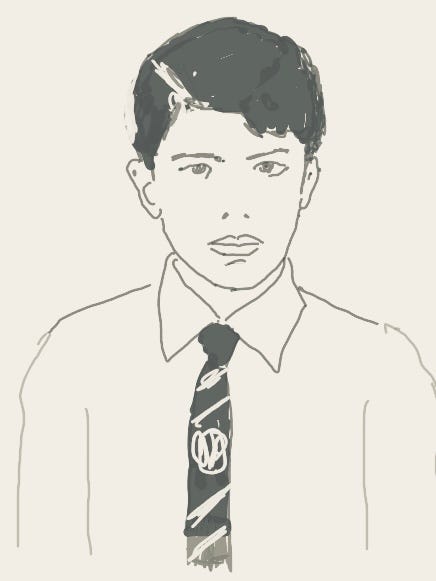


Comments
Post a Comment