Imti, the magic of Sholay
Imti, the magic of Sholay

Working in the bank was not the polite occupation it appeared to be from the outside. The day began at seven sharp, before the heat had properly lifted, the telex machines already chattering themselves awake. Messages arrived from everywhere at once — payments to be cleared, import and export credits to be checked, authorisations, guarantees, wire transfers shuttling restlessly between London, New York, Bombay, Karachi, Bahrain, and Hong Kong. By mid-morning the air felt spent, heavy with carbon paper, ink, and the quiet anxiety that precision demanded.
Among the clerks, one figure stood apart. Imtiaz was solidly built, self-possessed, and spoke English with an ease that immediately commanded attention. He was from Kerala, but languages seemed to gather around him naturally — Malayalam, Hindi, English, and others besides — worn lightly, without display. He spoke thoughtfully, as if words carried weight. Friendship, in that place and time, did not require ceremony. From the moment we spoke, it was simply understood.
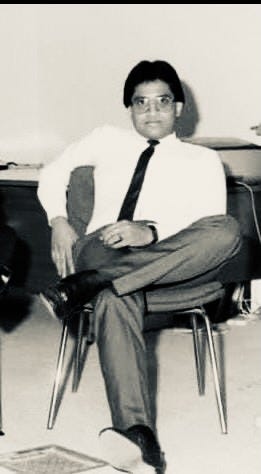

It was Imtiaz who introduced me to the small shops outside the bank, places that survived on the steady traffic of clerks and messengers. There, paratta with fried eggs and a glass of Lipton tea became my mid-morning ritual. Often he insisted on paying — not because he had to, but because he liked to share these small joys with a friend. Some days we had egg sandwiches with toasties. Whether the paratta was fresh from the griddle or the toast bread warm from the Dubai Automatic Bakery, there was always a slice of tomato tucked in the middle. It was food of astonishing simplicity, tasty as hell, and even now — nearly fifty years later — the memory of its aroma can still summon hunger.
I had an unashamed fascination with Hindi films — the stars, the music, the extravagant emotions — and Imtiaz recognised this early. He would smile and say, with mock solemnity, I will take you to see a movie one of these days, in that unmistakably Indian way that made the promise feel both casual and certain.
It was during one of those mid-morning teas that Imtiaz mentioned Sholay. I already knew of it. I had read about the film back in Sri Lanka after its release in 1975. I knew the director Ramesh Sippy, and that his father, the formidable G. P. Sippy, had produced it. Even from a distance, I understood it was no ordinary film — a phenomenon, the biggest hit India had ever seen.
I wanted to see it desperately. So when Imtiaz — now simply Imti to me — offered to take me after work, I agreed at once, without hesitation, as though something long anticipated had finally found its moment.
That afternoon, I finished work as quickly as a workday would allow. We left at 3.30 pm, Imti moving briskly through the last of the cheques and figures. From the bank we walked to the abra station and crossed the creek, the ferry gliding across water already thick with evening movement. From there it was an easy walk to the Deira Cinema — perhaps a kilometre, nothing for two lads.
I remember the cinema clearly, its façade dominated by enormous posters of Sholay. People were already queuing for the 4.30 pm show. Giant cut-outs of Amitabh Bachchan, Dharmendra, Hema Malini, and Amjad Khan stood on display, larger than life. Imti paid for the tickets — six dirhams — not the money that mattered, but the thought that I should experience the film as he had so many times before. Soon we were inside, swept along by a throng of Indian fans.
The film began on time, and from the start it felt epic. Dharmendra played the drunken hero, hopelessly in love with Hema Malini’s spirited, whip-wielding Basanti. Amitabh Bachchan was the quieter hero, innocent and intense, dressed throughout in denim and a black shirt. Sanjeev Kumar appeared as the police inspector, his hands brutally severed by the villain, Amjad Khan, whose Gabbar Singh loomed over the film like a force of nature.
I was thrilled — by the action, the scale, the music — and leaned often towards Imti as he quietly explained a difficult Hindi word or a line thick with meaning. It was clear this was not his first viewing. In fact, it was his third. Sholay had already been running for over a year when we saw it, a runaway success by any measure.
The film ran for nearly three and a half hours, including a short interval when we sipped Canada Dry soft drinks from glass bottles, seventy-five fils each. In those days, audiences happily surrendered themselves to such length. The interval was almost a social event in itself. The film did not feel long. It felt inhabited.
When we left the cinema it was late, just past eight. Outside, Deira had softened into night. We found our way to the taxi stand in front of the cinema, skirting sand dunes that still pressed close to the road, and joined the loose, patient order of men waiting to be carried home. Shared taxis were the rule then, not the exception, and destinations were negotiated in fragments — street names, landmarks, gestures.
Mine was a Datsun 1200, the taxi of choice for young migrants: small, reliable, uncomplaining. It rattled obediently into the night, carrying clerks, labourers, and dreamers back to their rooms and routines. As the car pulled away, Sholay still echoed in my head — the music, the heroics, the faces larger than life — while the city, and Imti’s quiet generosity, returned me, gently, to myself.


Comments
Post a Comment